The Golden Era of Analog Supercars: Why McLaren F1, F40, and Carrera GT Values Are Exploding
M
Marcus Vance
· 12 min read read
0 min left
We live in an era of unprecedented automotive performance. Today, you can walk into a dealership and purchase a family SUV that produces over 600 horsepower, accelerates from zero to 100 km/h in under four seconds, and manages wheel-spin with millions of lines of proprietary stability control code. Performance has been democratized, digitized, and sterilized.
And yet, across the international collector landscape, the most discerning driving enthusiasts are looking backward with intense longing. At Monterey Car Week, Villa d'Este, and Goodwood, auction records for pure analog supercars are exploding into the stratosphere. Why? Because the automotive world has finally realized that we will never, ever see their like again.
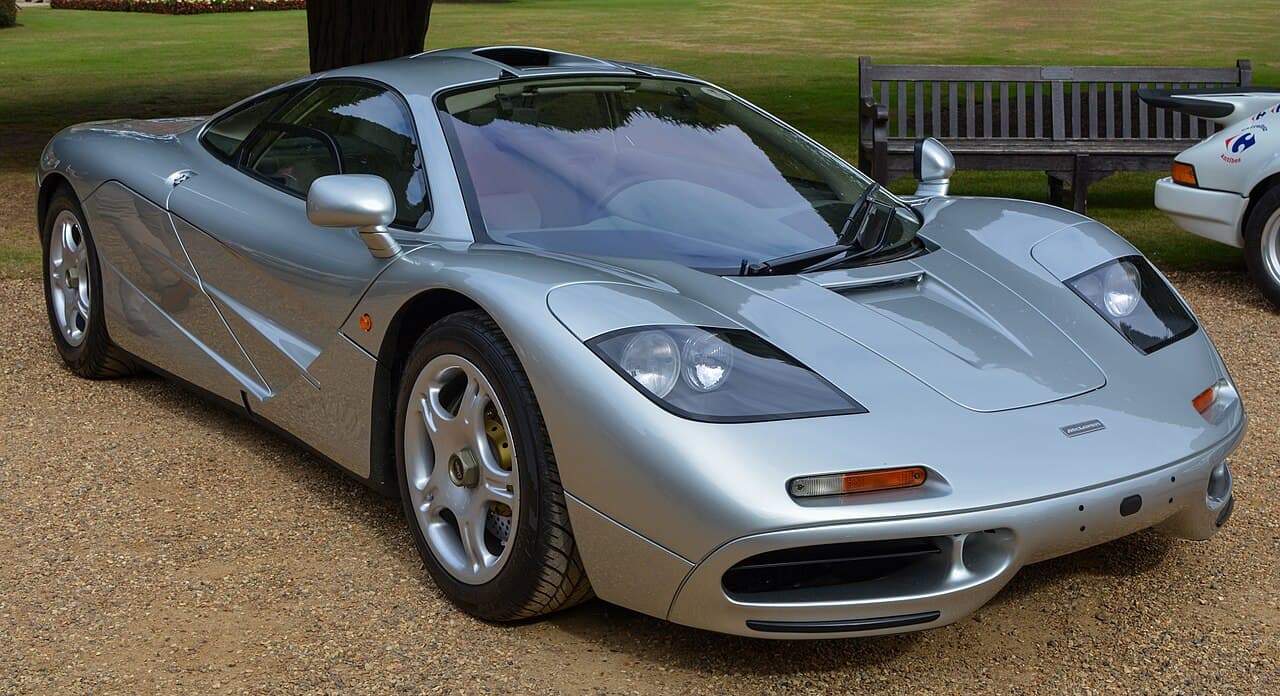
McLaren F1 XP5 Carbon Monocoque and Gold Foil Engine Bay📷 Picture courtesy of McLaren Automotive
To understand the astronomical appreciation of the analog supercar, one must examine the holy trinity of unassisted mechanical masterpieces: the Ferrari F40, the McLaren F1, and the Porsche Carrera GT.
Each vehicle was engineered during a fleeting historical window when lightweight carbon materials and high-revving combustion engines were mature, but before digital driving nannies, heavy hybrid batteries, and automated paddle-shifters took over the driver's seat.
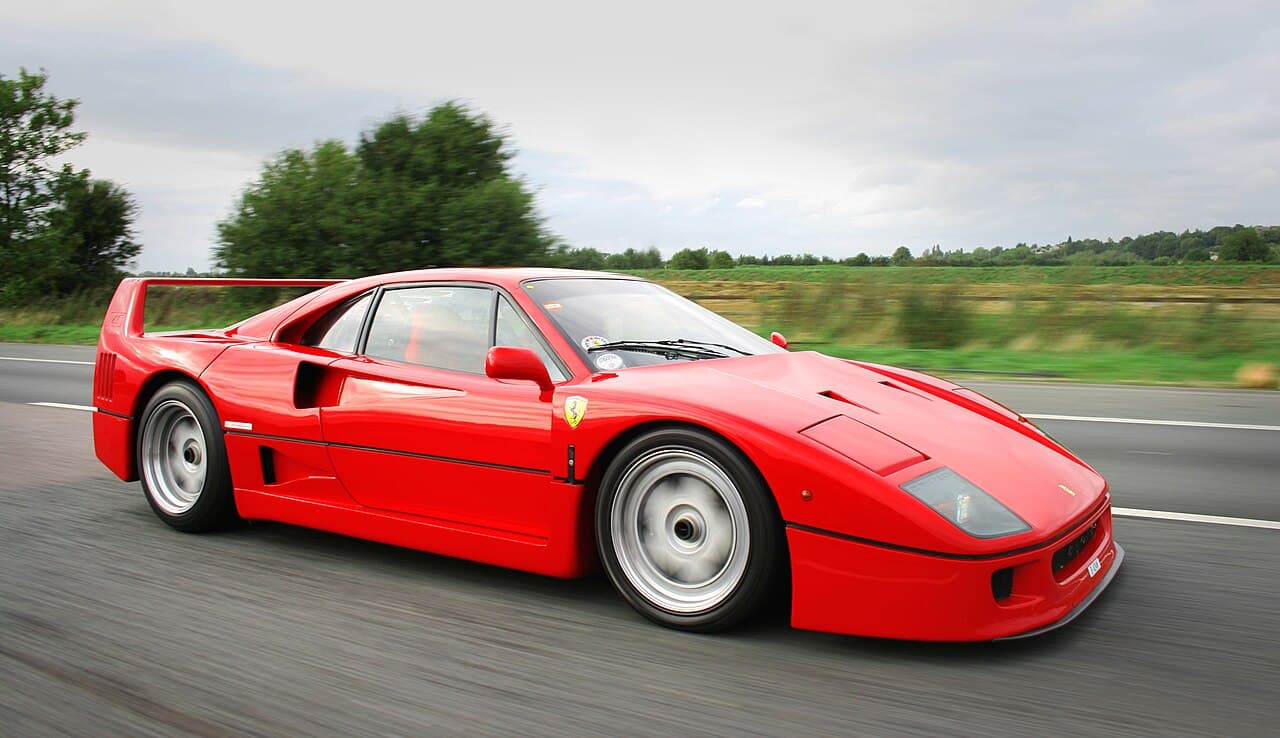
- *Engine*: 2.9-liter twin-turbocharged Tipo F120A 90° V8
- *Power*: 478 PS (471 hp) @ 7,000 rpm
- *Transmission*: 5-speed gated manual with dog-leg first gear
- *Curb Weight*: 1,254 kg (2,765 lbs)
- *Driver Assists*: Zero ABS, zero power steering, zero traction control, zero brake booster
- *Construction*: Kevlar, carbon fiber, Nomex honeycomb tub, and plexiglass sliding windows
McLaren F1 (1993):
- *Engine*: 6.1-liter BMW Motorsport S70/2 60° naturally aspirated V12
- *Power*: 627 PS (618 hp) @ 7,400 rpm
- *Transmission*: 6-speed transverse manual gearbox with carbon clutch
- *Curb Weight*: 1,138 kg (2,509 lbs)
- *Driver Assists*: None. Pure mechanical linkage from pedal to throttle butterfly
- *Top Speed*: 391 km/h (240.1 mph)—still the naturally aspirated production world record!
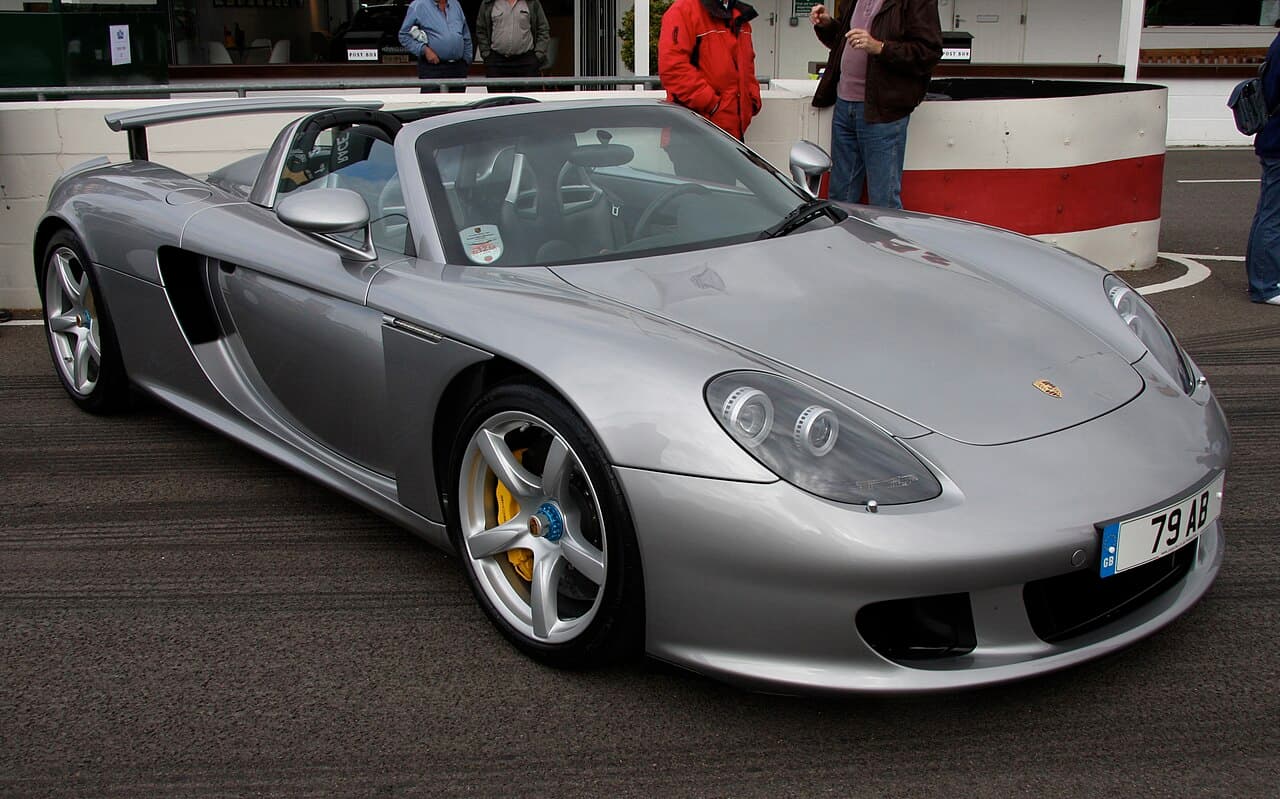
Porsche Carrera GT (2004):
- *Engine*: 5.7-liter naturally aspirated dry-sump 68° V10 derived from Footwork F1 / Le Mans V10
- *Power*: 612 PS (604 hp) @ 8,000 rpm
- *Transmission*: 6-speed manual with birch and beechwood shift knob
- *Curb Weight*: 1,380 kg (3,042 lbs)
- *Clutch*: Porsche Ceramic Composite Clutch (PCCC) measuring just 169mm in diameter
- *Chassis*: Full carbon-fiber monocoque and carbon subframe
“"In the McLaren F1, you are not a passenger managed by traction control algorithms. Every throttle input, every clutch bite, and every steering twitch is your unmediated dialogue with mechanical greatness."”
Driving an F40 is an experience of terrifying, glorious intimacy. When the twin IHI turbochargers spool past 3,500 rpm, the engine bay erupts behind your spine, delivering a relentless wave of raw boost that requires lightning-fast steering corrections. There is no computer to catch you; your right foot is the traction control.
Ferrari F40 Twin-Turbo Lightweight Kevlar Bodywork📷 Picture courtesy of Ferrari Classiche
The Market Reality: From Supercars to Cultural Relics#
The financial markets have reflected this cultural reassessment with unprecedented value increases over the past five years:
McLaren F1: Once priced at $1 million when new in 1994, pristine road examples now command $20M to $25M+ at private treaty and public auction, cementing its status as the modern equivalent of the Ferrari 250 GTO.
Ferrari F40: European non-cat, non-adjust examples routinely trade between $3.2M and $4.0M, outperforming contemporary modern hypercars in capital preservation.
Porsche Carrera GT: Having spent years hovering around $600,000, top-tier Carrera GTs with documented service history have surged past $1.8M to $2.4M, with low-mileage Paint-to-Sample cars setting record highs.
Porsche Carrera GT 5.7L V10 Carbon Monocoque📷 Picture courtesy of Porsche Museum
The explosion in value is not speculative hype; it is founded on the cold legal reality of automotive regulation:
Safety Regulations: Pedestrian impact crash standards have mandated blunt, tall front fascias, eliminating the razor-sharp low noses of the F40 and F1.
Electronic Mandates: Mandatory electronic stability control (ESC), automated emergency braking (AEB), and cybernetic brake-by-wire regulations make fully unassisted analog control illegal in new volume vehicles.
Emissions & Noise Restrictions: Stringent GPF (gasoline particulate filter) mandates and drive-by acoustic noise restrictions have silenced the raw, unfiltered operatic howl of high-revving naturally aspirated V10 and V12 engines.
The McLaren F1, Ferrari F40, and Porsche Carrera GT represent the absolute golden peak of analog driving engagement. They were born in a brief, unrepeatable era when engineering mastery was judged not by computational power, but by the purity of connection between human and machine.